Comment

Dry Needling vs. Active Release Technique (ART): Which Is Right for You?

If you’re a weekend warrior, a recreational athlete, or someone who just wants to get back to being active after an old injury has been holding you back, you’ve probably run into two treatment names that get thrown around a lot at chiropractic and sports medicine clinics in Nashville: dry needling and Active Release Technique (ART). Patients often ask which one they should get, as if it’s an either/or decision. In my practice, it rarely is. Both are powerful tools, they work in different ways, and knowing when to reach for each (or both) is a big part of getting you back to training, running, lifting, or just moving without pain.

Here’s how I actually think about these two techniques, what they feel like from the table, and how we decide which one, or which combination, makes sense for your injury.

What Is Dry Needling?

Dry needling uses a thin, solid filament needle inserted directly into muscle tissue, often targeting a trigger point or a specific area that isn’t getting enough blood flow. Unlike a hypodermic needle, it isn’t putting anything into your body or drawing anything out. It’s a mechanical and neurological stimulus that helps reset an irritated muscle and drive fresh blood flow into tissue that’s been chronically undernourished.

Dry needling tends to be my first choice in a few specific situations:

Tendon problems that have been around for a while. A lot of “tendonitis” that’s stuck around for months isn’t actually inflamed anymore, it’s tendonosis, a degenerative change in the tissue rather than an active inflammatory process. Needling is excellent at driving the blood flow and cellular response that degenerated tendon tissue needs to actually heal.

When active movement is too painful to work with. If a patient can’t tolerate much active range of motion but can tolerate lying still on the table, needling lets us treat the tissue without asking the body to do something it isn’t ready for yet.

Deep tissue that’s hard to reach any other way. Structures like the hip external rotators or deep lumbar musculature sit underneath layers of other tissue. A needle can get to that depth in a way that hands or tools simply can’t.

What Is Active Release Technique (ART)?

ART is a hands-on, manual technique where I combine precise tension with very specific patient movement to free up muscles, nerves, and other soft tissue that have become restricted or “stuck” to surrounding structures. It’s not massage, and it’s not generic soft-tissue work. True ART is highly specific to the exact tissue and the exact restriction we’re trying to address.

ART tends to be the better tool when:

There’s a repetitive-use injury with a nerve that’s gotten caught up in surrounding tissue and isn’t gliding the way it should.

A joint only feels symptomatic near the end ranges of motion. ART lets us work through that specific range and restore the movement that’s missing.

Active range of motion is possible and useful. Any time a patient can move through a position while I’m working, I prefer to use that. ART is built around combining motion and tension together, so it lets us restore function while we treat.

What It Actually Feels Like

I get it, needles sound scary to a lot of people, and I understand that reaction because I don’t love needles myself. But dry needling has nothing in common with the hypodermic needles most people are picturing. The needles used for dry needling are extremely thin, solid filaments, and most patients barely feel them go in. We’ll often add a small electrical stimulation to the needle to create a gentle muscle contraction, similar to what you’d feel with stim therapy, and most people find it more comfortable than they expected, sometimes even more comfortable than firm manual work or tool-based treatment.

One misconception worth clearing up: a lot of patients come in expecting, or even wanting, to feel a muscle “twitch” during needling. That twitch response doesn’t actually correlate much with how effective the treatment is. Don’t judge the session by whether you felt a twitch.

ART feels different. I’m upfront with patients that it isn’t meant to feel relaxing. You should expect it to be uncomfortable. Somewhere around a 5 or 6 out of 10 on a pain scale is normal and expected. But we always work within a range you can tolerate, because if we push past that, the tissue responds by guarding and locking down, which works against what we’re trying to accomplish. Good communication during the session lets us apply enough pressure to make real change without tipping into a range that backfires. It’s a fine line, but when we find it, I hear the same phrase from patients constantly: “this hurts so good.”

It’s also worth knowing that not all “ART” is created equal. True ART is a highly specific, protocol-driven technique. It’s a different level of specificity than a general pin-and-stretch massage technique, even though those can look similar from the outside. If you’ve had that kind of soft-tissue work before and didn’t love it, it’s not necessarily a preview of what true ART feels like.

When I Use Both Together

Some of the best results come from combining both techniques rather than picking just one, especially with old scar tissue. Nothing restores blood flow into scarred, poorly-perfused tissue quite like a needle. But scar tissue also isn’t specific. It tends to bind up surrounding muscles, nerves, and other structures that need to move independently of it.

In those cases, I’ll often use ART first to restore as much relative motion between those structures as possible, then finish with dry needling to improve blood flow directly into the scarred tissue itself that isn’t getting good perfusion. Each technique is doing a job the other one isn’t built for.

Having both tools available also matters for a simpler reason: sometimes a patient’s tolerance for needles, pressure, or the range of motion required for one technique just won’t allow for it that day. Having a high-quality plan B, rather than no alternative at all, means treatment doesn’t stall out. And it isn’t only about necessity. Sometimes it comes down to patient preference, and that’s a perfectly valid reason to choose one over the other.

What’s interesting is how often patients are surprised by the technique they didn’t ask for. Many people come in with their mind made up that they want dry needling, or that they only want ART, and after a few sessions of layering both in, they find real, distinct value in each one. Neither is a “backup” to the other; they’re just different tools solving different problems.

Who Benefits Most From These Treatments

This approach is built for weekend warriors, recreational athletes, and anyone who wants to get back to being active but has been sidelined, or held back, by a past or current injury. If pain, stiffness, or an old nagging injury has been the thing standing between you and training, running, lifting, or just moving the way you used to, this is exactly the kind of problem dry needling and ART are designed to solve.

The Bottom Line

Dry needling and ART aren’t competing treatments. They’re two distinct tools that address different problems in different ways. Chronic tendon issues, deep musculature, and situations where active movement isn’t tolerable tend to respond well to needling. Nerve entrapments, end-range joint restrictions, and situations where we can use active motion during treatment tend to respond well to ART. And when old scar tissue is involved, combining both often gets better results than either alone.

If you’ve been dealing with an injury that’s kept you from training or staying active, understanding these options is the first step toward figuring out the right path forward.

Comment

Comment

Tendinitis vs. Tendinosis: The Actual Rehab Framework (Part 2)

In Part 1, we covered the difference between tendinitis and tendinosis, and why treating one like the other is a common reason tendon pain drags on far longer than it should. This post is the part most people actually want: what does the rehab itself look like once a tendon is past the acute, calm-it-down phase and ready to be loaded back up.

There’s nothing flashy here. It’s not a 12-week periodized program. It’s a framework I use with almost every tendon issue that walks through the door, whether it’s a shoulder, an elbow, a knee, or an Achilles.

Start Where It’s Boring: Isometrics

The starting point is almost always an isometric hold: a muscle contraction with no movement, held in a neutral, comfortable position. I’ll usually start with 30 seconds, for three sets, in whatever range feels the safest and least provoking.

If that’s tolerated well, the next step is working that same isometric hold through more of the available range, not just the easy spot. The goal is to distribute load across the full range the tendon actually has to deal with in real life, not just the pain-free portion of it.

Eventually, you’re working your way toward holding right at the point where symptoms would normally start. Take a bench press, for example. If someone’s shoulder is irritated near the bottom of the movement, they don’t get to stay at 12 inches off the chest forever. Over time, that hold moves to 6 inches, and eventually to a full-depth hold. The tendon has to relearn how to tolerate load in the position that’s actually giving it trouble, not just in the position that’s easy.

Adding Eccentrics Without Dropping the Isometrics

Once someone can tolerate isometric holds through most of that range, that’s the signal to start layering in eccentric work. Eccentrics are the slow, controlled lengthening portion of a movement, and they’re one of the better-studied tools for actually remodeling tendon tissue.

I don’t pull the isometrics out when eccentrics get added in. A typical setup might be one or two sets of isometric holds, followed by a third set of slow eccentrics, something like 5 to 10 seconds per rep, for 5 to 8 reps. Using the same bench press example, that third set becomes slow negatives.

The isometrics stick around because they’re still doing a job the eccentrics aren’t. You’re not graduating away from one phase into the next so much as building layers on top of each other.

The Pain Rule That Actually Matters

People want a hard rule for how much discomfort is acceptable during this process, and there is one, but it’s less about a single number and more about two patterns.

During the exercise itself, staying in the 2 to 4 out of 10 range is generally fine. What matters more than that number is whether it’s climbing rep over rep, set over set, or staying flat. Pain that’s steady at a 3 is a very different signal than pain that starts at a 2 and keeps building. Steady pain is what we’re after, not pain that gradually climbs toward the edge of what you can tolerate.

The second piece is what happens afterward. Some soreness after loading a cranky tendon is normal. What’s not normal is pain that lingers well past an hour or so after you’re done. If you’re still feeling it that evening, or it’s noticeably worse the next morning, that’s a sign the dose was too much for where the tissue is right now, not a sign to push through it next time.

It’s Not Just the Tendon, It’s the Movement

Here’s a piece that gets missed constantly: you can do a technically perfect job rehabbing the tendon itself and still have the problem come right back if the movement mechanics around it are poor.

This matters most for what I’d call stabilizing tendons, things like the rotator cuff, where the tendon’s job is less about handling one big load and more about controlling a joint through a wide range of everyday movement. Good scapulohumeral control, meaning how well the shoulder blade and upper arm coordinate through pushing and pulling, is fundamental to protecting that tendon once it’s back under load.

Load-bearing tendons like the patellar tendon or Achilles are protected by a different mechanism. Their job isn’t stabilizing a joint through a range of motion, it’s handling raw force, and that force gets distributed through the whole chain during a movement like a squat or hinge. If the hips and glutes aren’t doing their share, the knee or ankle ends up absorbing load that should have been shared out, and the tendon takes the hit. So for these tendons, it’s squat and hinge mechanics specifically that matter, not the pushing and pulling patterns that protect a tendon like the rotator cuff.

If the tendon heals well but the underlying movement skill never gets addressed, the fix tends to take much longer to fully resolve, and it tends to come back. So the coordination and skill side of a lift or movement pattern isn’t a side note. It’s another layer of the rehab itself, right alongside the loading progression.

Judging Progress by the Week, Not the Workout

Figuring out exactly how much rehab work someone should be doing isn’t an exact science. It’s closer to an ongoing experiment than a fixed prescription. Even a well-structured routine can overload healing tissue if there’s simply too much of it.

Because of that, the right time horizon for judging whether something’s working is a week, not a single session. If someone’s feeling more symptoms 24 to 48 hours after a workout, that’s the cue to back off, whether that means taking a day or two off entirely or just scaling back the volume within a session.

One of the most useful markers isn’t even in the gym. It’s daily life. Morning pain, discomfort going up and down stairs, or whatever that person’s specific everyday trigger happens to be. As rehab is working, those everyday symptoms should be gradually fading. If they’re staying flat or getting worse instead, that’s the real signal to adjust the routine, often before the training itself even tells you something’s wrong.

The Takeaway

When it comes to navigating pain, there’s no script that works for everybody. But rehab still needs the right starting point to get the result you’re after, and that starts with understanding the itis versus osis conversation from Part 1.

From there, the framework is straightforward. Calm things down or load them up, depending on which one you’re actually dealing with. Start with isometrics, then add eccentrics without dropping the isometrics. Stay within a pain range that holds steady instead of escalating or lingering. Fix the movement mechanics around the tendon, not just the tendon itself. And judge progress by the week and by daily life, not by any single workout.

Follow this framework and you should find success. From here, what’s standing in your way isn’t the plan, it’s consistency and ego. Keep up with the exercises, and don’t be too quick to jump back into the deep end before you’re actually ready.

Comment

Comment

Tendinitis vs. Tendinosis: Why the Difference Actually Changes Your Treatment (Part 1)

If you’ve ever been told you have “tendinitis” in your shoulder, elbow, knee, or Achilles, there’s a good chance that label wasn’t quite right, and it might be part of why it never fully went away. “Itis” and “osis” get used interchangeably all the time, by both patients and providers, but they describe two genuinely different problems. Knowing which one you actually have changes how it should be treated. Your approach, especially in the first few weeks, may be completely different depending on what you have.

This post is meant to be the framework. Once you understand the difference between tendinitis and tendinosis, and what actually puts a tendon at risk in the first place, you can have a much better understanding of how to approach many different issues, including tennis elbow, patellar tendon pain, or Achilles problems.

Tendinitis vs. Tendinosis: What’s Actually Different

Tendinitis is inflammation. It shows up after a tendon gets overloaded, whether that’s a sudden spike in activity or just doing too much, too fast, for tissue that wasn’t ready for it or never fully recovered between repetitive stresses. It’s an acute response, and like most acute inflammation, it’s your body’s normal, healthy attempt to deal with an insult.

Tendinosis is a different animal entirely. It’s not inflammation, it’s degeneration. Over time, the fibers that make up the tendon become disorganized instead of neatly aligned, and the tendon’s normal healing response essentially stalls out. It’s less “this is inflamed” and more “this tissue has broken down and hasn’t rebuilt itself correctly.”

Here’s the rough timeline of when that transition takes place. Tendinitis that doesn’t resolve within about six weeks starts trending toward tendinosis. Whether that actually happens, and how quickly, depends on a few things: how severe the initial overload was, whether the tendon kept getting aggravated instead of given a chance to calm down, and how well it was loaded (or not loaded) during that window. A tendon that gets some appropriate stress during recovery tends to heal in an organized way. A tendon that’s either aggravated repeatedly or rested completely tends not to.

This matters because tendinitis and tendinosis need different things from treatment, and treating one like the other is a common reason tendon pain drags on for months instead of weeks.

Why the Treatment Approach Has to Shift

When a tendon is genuinely inflamed (true tendinitis), the goal is calming things down. That usually means relative rest, not total rest, along with hands-on work aimed at the muscle and surrounding tissue rather than the tendon itself. Things like reducing tension in the muscle belly, addressing referred tightness, and supporting blood flow to the area. The tendon isn’t ready for aggressive input yet, and treating it in that manner tends to backfire.

Once a tendon has shifted into tendinosis, the approach flips. Rest stops being the answer, because there’s no active inflammation to calm down, and a tendon in this state has effectively stopped trying to heal on its own. What it actually needs is a controlled stimulus that tells it to remodel. That’s where more direct, targeted manual work comes in, and more importantly, where progressive loading becomes the primary tool rather than an afterthought. In this phase, load is the medicine. We’ll go into exactly what that loading looks like, and how to progress it safely, in Part 2.

Risk Factors: What Actually Puts a Tendon at Risk

Some of these you can influence. Some you can’t. All of them are worth knowing, because they explain why two people can do the exact same activity and only one of them ends up with a tendon problem.

Smoking. Nicotine reduces blood flow, and tendons already have relatively poor blood supply to begin with. Less blood flow means a slower, less effective healing response.

Diabetes. Elevated blood sugar changes the structure of collagen itself, the material tendons are made of, and reduces the tissue’s tolerance for the low-oxygen conditions that come with healing. This is one of the more significant, evidence-backed risk factors for tendon problems, and it’s also a factor that makes certain medication-related risks (more on that below) considerably worse.

High cholesterol. Excess fat can actually deposit within the tendon itself, disrupting the organization of the collagen fibers and weakening the tissue’s structural integrity.

Repeated corticosteroid injections. An occasional steroid injection has its place, but repeated injections into or near a tendon can reduce the health of the tendon’s own cells and interfere with its ability to rebuild itself over time.

Long-term NSAID use. Anti-inflammatories like ibuprofen are useful for short-term pain control, but chronic, ongoing use has been shown to interfere with the tendon cells’ ability to produce new tissue. Something meant to help an overuse injury can end up prolonging it.

Certain antibiotics. Fluoroquinolone antibiotics (common brand and generic names include Cipro and levofloxacin) carry a well-documented risk of tendon damage, including rupture, particularly in the Achilles. That risk climbs sharply in people who are also on corticosteroids, older than 60, or dealing with diabetes or kidney issues. If you’re prescribed one of these and you’re already managing a tendon issue, it’s worth a conversation with your prescriber.

Rapid increases in training load. This is the classic driver, and probably the most common one we see. Tendons adapt to load, but slowly. Ramping up mileage, weight, or intensity faster than the tendon can keep up with is one of the most reliable ways to trigger a problem.

Anabolic steroid use. This one deserves its own mention because the mechanism is so specific. Muscles respond to anabolic steroids fast, getting stronger much quicker than tendons can adapt to handle that new force. On top of that mismatch, steroids appear to interfere directly with how collagen fibers are built and cross-linked, making the tendon itself lower quality at the same time it’s being asked to handle more load. The combination shows up in the research as a meaningfully higher rate of tendon rupture in steroid users compared to non-users. If you’re using anabolics and training hard, your tendons need to be treated as the limiting factor, not your muscles.

Age and previous tendon injury. Tendons lose some elasticity and healing capacity as we age, and a tendon that’s been injured before is statistically more likely to have issues again.

Poor sleep and chronic stress. This one works from two directions at once. Poor sleep raises cortisol, and cortisol directly suppresses the cells responsible for building new collagen. At the same time, you lose out on growth hormone, which is released mainly during deep sleep and is one of the main signals telling your body to actually rebuild tendon tissue. Less of what builds it, more of what breaks it down. Not the flashiest risk factor on this list, but a real one.

The Takeaway

If there’s one thing to walk away with from Part 1, it’s this: not all tendon pain is the same problem, and the label matters. Early on, a tendon usually needs to be calmed down. Later, it usually needs to be loaded back up. Getting that sequence backward, resting a tendon that needs load, or loading a tendon that’s still actively inflamed, is a major reason tendon issues become chronic instead of resolving in a normal timeframe.

It’s also worth taking an honest look at the risk factor list. Some of these (a smoking habit, unmanaged blood sugar, a training load that jumped up too fast) are squarely in your control, and addressing them can matter as much as any hands-on treatment.

In Part 2, we’ll get into the actual rehab framework: how isometrics and eccentric loading fit together, how to know when you’re ready to progress, and how to know when to back off.

Comment

That Numbness in Your Hands Is Likely NOT Carpal Tunnel

Comment

That Numbness in Your Hands Is Likely NOT Carpal Tunnel

I see many patients that come to me saying they have “Carpal Tunnel”, however very few people really understand what that is. This is a problem, because if you don’t have carpal tunnel, but are getting advice for carpal tunnel you may be delaying the proper care which can prevent you from finding a solution long term!

Comment

The 30 Day Ab Challenge : AKA The Back Pain Challenge

Comment

The 30 Day Ab Challenge : AKA The Back Pain Challenge

So without even getting into the detrimental effects that repetitive flexion and extension can have on the lumbar spine, the first two exercises of that program, at best, are redundant and miss the boat on core strengthening. A good core routine hits the entire cylinder of the core including the front, back, and sides.

Comment

Blood Flow Restriction Training

Comment

Blood Flow Restriction Training

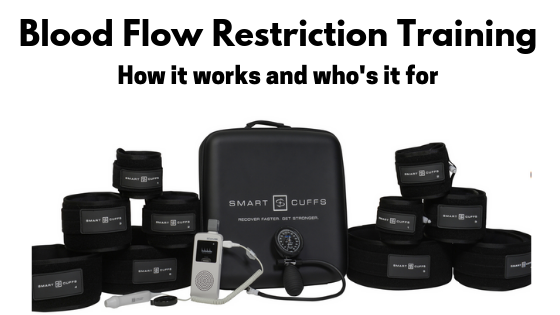
Growth Hormone is king when it comes to building muscle and repairing damage. When more growth hormone is present, you’ll see more rapid recovery and more strength gains. GH levels have been shown to jump nearly 300% from baseline during BFR training which is nearly TWICE the amount with more intense free flowing exercise. (takarada 2000)

Comment

What Shoes Should I Be Wearing?

Comment

What Shoes Should I Be Wearing?

Navigating the shoe market can be daunting. Do you need extra arch support? Or maybe the minimalist shoes, which claim to be more functional, are best for you? Which do you choose?

Comment

3 Tremendously Helpful Tools For Tennis Elbow

Comment

3 Tremendously Helpful Tools For Tennis Elbow

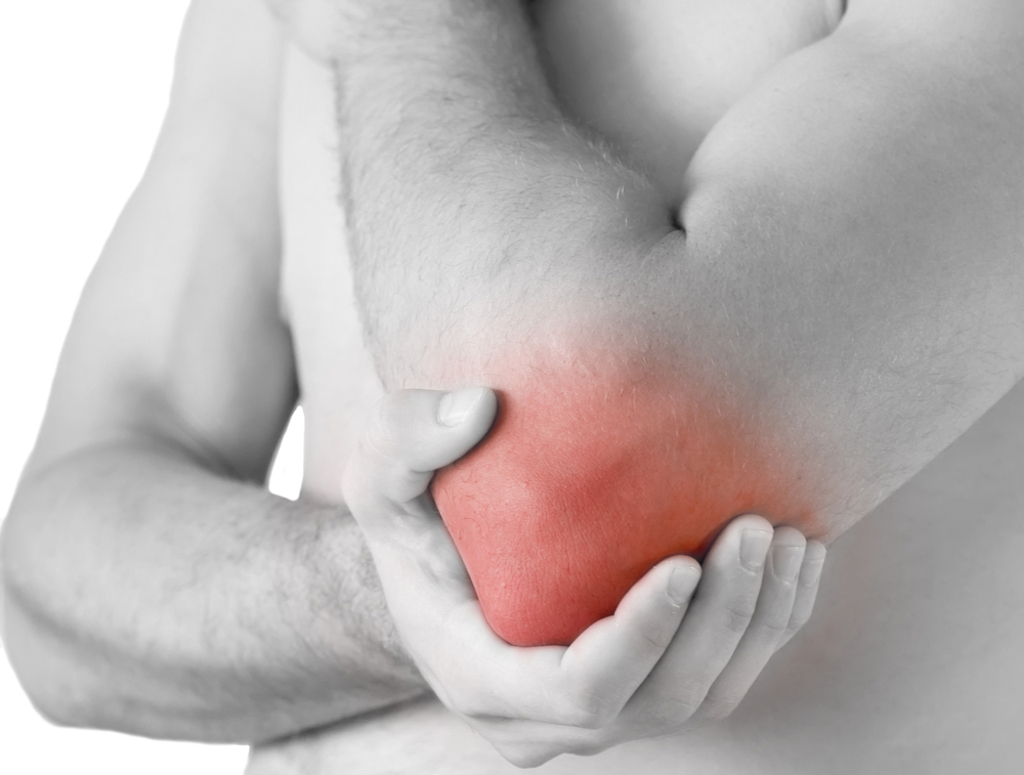
Tennis elbow is the most frustrating injury I have ever dealt with. What began as a twinge outside of my right elbow quickly became a sharp ache that haunted me day and night. Not only were workouts painful—even picking up a glass of water hurt. But, after months of trial and error, I discovered tools and strategies that helped me recover.

Comment

Home Gym Essentials

Comment

Home Gym Essentials

Below you’ll find links to our recommendations for building your home gym. Each product is one that we use and believe in. Retail stores charge too much for our liking, which is why we searched hard to find options that are both high quality and affordable so that you don’t over pay or settle for low quality equipment.

Comment

Welcome to ChiroStrength Hunter!

1 Comment

Welcome to ChiroStrength Hunter!

I began thinking of ways to blend traditional fitness and rehab/prehab together with the goal of creating exercise programs that allow someone to pursue their fitness goals while becoming more injury resistant at the same time. Now I’ve come back to ChiroStrength to do just that.

1 Comment

Top 5 Hip Mobility Drills

Comment

Top 5 Hip Mobility Drills

Locked up hips will wreck the low back and lead to significant injury to the lower lumbar spine especially.  Also, when the hips are blocked, the body will respond by gaining more mobility below by requiring more lateral shift and rotation at the knee.

Comment

Knee Pain: Is It Really A Knee Problem

Comment

Knee Pain: Is It Really A Knee Problem

The first line of defense for most knee pain is injections, medication, or surgery.  All of these options are viable options, but should be a last resort.  This blog will explain how you should really approach knee pain first.

Comment

Traveler's Guide to Fitness and Being Pain Free

Comment

Traveler's Guide to Fitness and Being Pain Free

However, there are some tools you can travel with, which can be packed into any suitcase, which allow you to turn any hotel room into a movement and rehab mecca.  Maybe over stating that a bit, but these 5 things will allow you to workout and perform body maintenance while on the go!

Comment

Does Your Squat Hurt Your Back?

Comment

Does Your Squat Hurt Your Back?

If ANYONE (yes, this includes doctors) has ever told you to stop squatting for good, they are making whatever problem you had worse.  To be fair, maybe you should stop squatting the way you squat, especially if you see one of these 3 major movement faults: butt wink, side shift, or forward fold.

Comment

The Posture Myth

Comment

The Posture Myth

Our brain will always default to the most familiar position when we aren’t consciously thinking about alignment, so in the course of an 8hr day, we need a different approach to offset the over stressed tissues other than saying, "Sit up straight".

Comment

Text or call  (931) 321-1414
ChiroStrength  ·  1504 Elm Hill Pike, Nashville, TN 37210
Mon 8:00 to 4:30  ·  Tue 8:00 to 4:30  ·  Wed closed  ·  Thu 8:00 to 1:00  ·  Fri 8:00 to 3:30  ·  Sat & Sun closed
All visits by appointment only