I began thinking of ways to blend traditional fitness and rehab/prehab together with the goal of creating exercise programs that allow someone to pursue their fitness goals while becoming more injury resistant at the same time. Now I’ve come back to ChiroStrength to do just that.
Viewing entries in
Health
However, there are some tools you can travel with, which can be packed into any suitcase, which allow you to turn any hotel room into a movement and rehab mecca. Maybe over stating that a bit, but these 5 things will allow you to workout and perform body maintenance while on the go!
Our brain will always default to the most familiar position when we aren’t consciously thinking about alignment, so in the course of an 8hr day, we need a different approach to offset the over stressed tissues other than saying, "Sit up straight".
The reason for this disruption is often not a “shoulder issue”, but a problem of the surrounding structures which the shoulder’s function depends on. Therefore, when looking for tips to recover from, or prevent shoulder pain/injury, look beyond the shoulder for complete resolution.
However, until the body is ready for this more advanced work, adopting these drills will set you up for faster recovery and less risk of pain/injury in those important first few months of your baby’s precious life!
Pain is like an onion; layered with compromised tissues that have failed to withstand the stress of your daily routine. Treat the pain, and you remove only one layer, but it will come back. But if we treat the pain, THEN remove each of these layers with a consistent, mindful, movement practice, you won’t be so dang easy to hurt!
Running Pain Free
Tips Beyond The Shoes and Miles
Running seems easy enough, right? After all, it’s just a slightly faster version of the walking we’ve done since we were toddlers! So, if you want to be better at running, all you need to do is run a lot and get mentally tough...
The reality is, running is very complex and requires the coordination of every muscle group in our body. Therefore, training all of these systems to work together in an efficient manner is a must in order to reduce the risk of over use injuries.
Here are 5 tips to include in your routine to ensure you can run for longer periods of time without hurting yourself.
1) Strength Training
This is a HUGE gap in the training for most runners. You may not think you need to squat and deadlift to run properly, but the body needs lots of strength to maintain proper hip and spinal alignment, especially when fatigue sets in. The more strength you can develop in the hips, back, and core, the more stable you will be throughout your run.
*Because running is essentially one set of several thousand reps, it’s a good idea to stay away from higher reps in your strength training. 1 -2 days a week and 5 sets of 5 reps is a good start.
Suggested Drills: Squats, Deadlifts, Reverse Lunges
2) Balance
When I’m assessing a runner and I hear, “I have terrible balance”, I make sure they realize that running just one long session of balance. You can easily spend 80% of a run on 1 foot; if you can’t balance on 1 foot for 10 seconds at rest, you are a ticking time bomb for injury. Not only do you need good balance, but you need strength on one leg. My favorite drill for improving your hip strength, balance, and coordination is the single leg dead lift. Here is Video explaining this in detail.
Other Suggested Drills: Single Leg Dead Lifts, Box Step Ups, Shrimp Squats
3) Core Isometrics
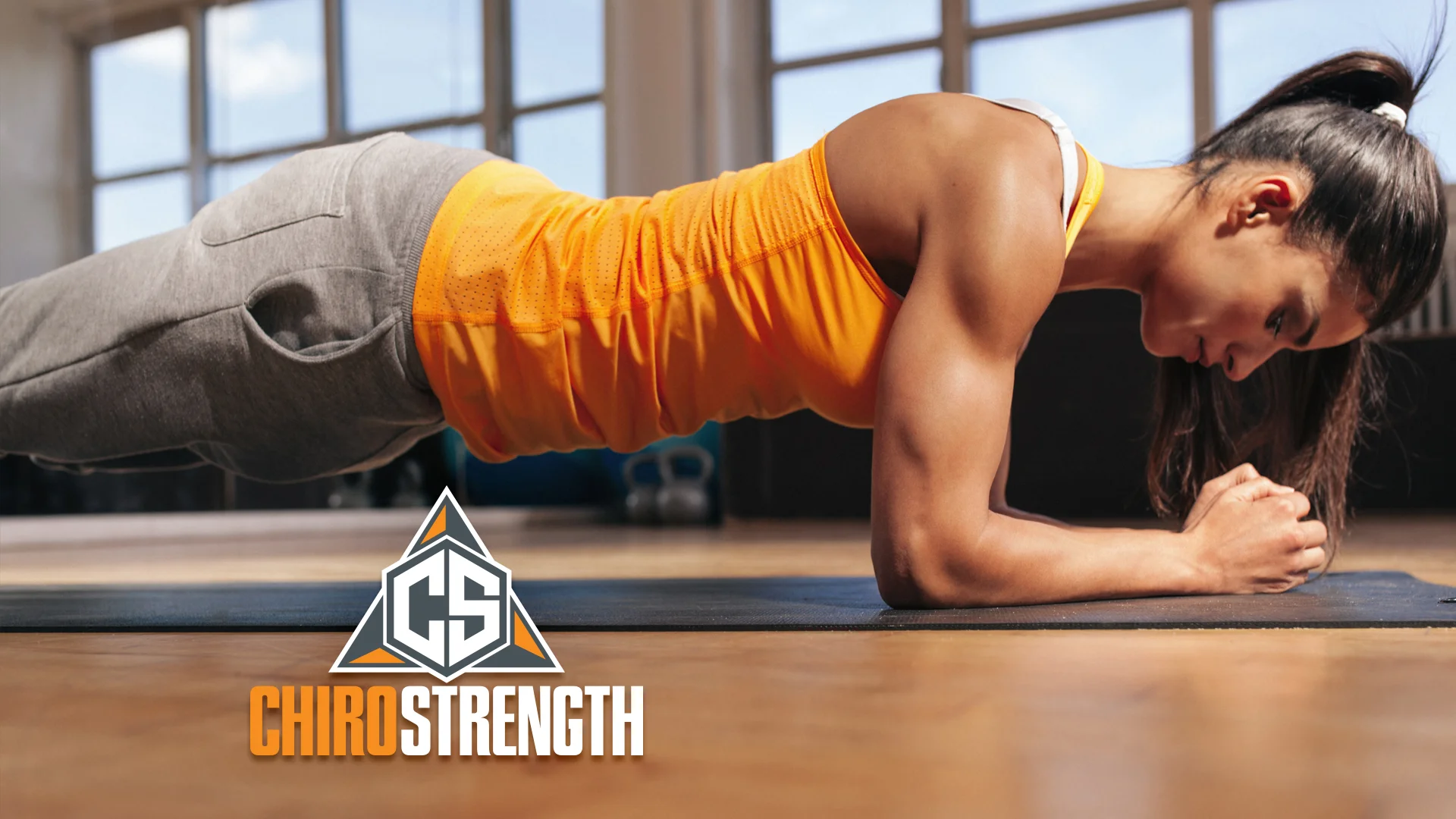
Contrary to popular belief, isometrics like planks are best used as breathing coordination drills. This means you must be able to contract the core while not holding your breath. Breath holding and shallow breathing will drain your energy while running, and a loose core will put your back and knees at risk. Therefore, to knock out two birds with one stone, practice these core Isometrics while maintaining good breathing patterns.
In the context of your running routine, perform these drills 2-3 times a week at least. Doing prior to your run after your stretching is ideal. *Yes, my hair was terrible...
4) Warm up properly
Simply stretching your calves for 2 minutes is not a sufficient warm up for something as complex as running. Stretching should be part of the warm up, but you should also warm up the core and pelvic stability muscles. Here is a good example of a 5 min warm up routine
2 min of active stretch for the hip flexors (1 min each side)
30 seconds of active stretch for each calf
1 min of core/ glute activation with drills like the deadbug and glute bridge (*focus on proper breathing!)
10 rear elevated split squats each leg. *Move slow and focus on your balance and hip power
5) Active recovery
“Rest days” should NOT equal “do nothing days”. On days you don’t run, you need be helping the tissues heal by foam rolling, cold showers, sauna sessions, massage therapy, etc. You should also be allowing the nervous system to rest by sleeping properly and staying away from cardio as a whole. These active recovery sessions are great days to practice balance and core coordination drills like chops and lifts and other core drills like shown in this video.
As you can see, there is much more to running than "right foot, left foot, right foot" 10,000 times in a row. Saying, "I don't have time for all this extra stuff" is an injury sentence, period. You will not meet a single top level competitor that has a narrow training regiment, becasue if they did, they would've been hurt long before they were able to achieve success.
Injury Risk can never be completely eliminated with any sport, but when it comes to running, following these tips will allow you to enjoy a long, successful running career and all the wonderful health benefits that comes with it with a much lower risk of those nagging injuries!
For more information on treatment or online coaching for sustainable exercise and pain relief, visit www.ChiroStrength.com or call the office 931-321-1414 to schedule your FREE consultation with Dr. Dunaway.
But one important tip for morning coffee drinkers. Don’t drink your coffee within one hour of waking. This is because your body’s natural circadian rhythm (sleep/wake cycle) needs time to adjust. The hormones being release in this first hour will drastically decrease the caffeine’s effect, and you’ll need more of it. Instead of reaching for coffee first thing, try these tips:
What's the take away here? Simply resting a groin strain until the pain is gone is not an adequate recovery protocol. Without addressing the important factors described in this blog, you will likely suffer from future ailments, such as hip impingement or hernias, due to the poor hip mechanics adopted by the body during the healing process.
Drills To Desensitize Your Painful Tissues
A Lesson From Boiling Water
Stress to your body can come in many different mechanisms. It may seem odd, but doing nothing and doing too much can cause similar pain syndromes because each of those scenarios have a common thread; they are performed with a certain posture for a prolonged time with no rest. Re-posturing is a way of relieving that pain from the repetition of daily life.
For better understanding, let’s compare our perception of pain to a pot of boiling water. If we take a pot of water and heat it up (stress it) we expect the water to boil at a certain point, it’s just a matter of time. Once reaching that threshold we can do 2 things to stop the boiling; add cold water or remove it from the heat (stressor).
Adding cold water without removing the heating source will keep the water from boiling for a period of time, but eventually the water will continue to boil. The amount and the frequency with which you add water will alter how long the boiling stops.
Removing the heating source will also keep the water from boiling, but the temperature of the water remains high so it takes less time to reach boiling point if the heat is introduced again.
Cold water in this analogy includes any treatment including massage therapy, physical therapy, chiropractic, stretching, etc. All of these options are great and necessary for certain conditions.
The trick comes in removing the heating source (pain mechanism) for long enough to decrease the water temperature (pain threshold) so it’s not as easy to boil the water, or elicit a pain response. The problem with repetitive stress is it’s often associated with a job description, and quitting your job isn’t a viable option for most. So enter the concept of Re-Posturing.
Essentially, with one exercise we are trying to take our joints through ranges of motion they would otherwise not be taken through in our normal posture. This exercise will be performed for 10-30 seconds every 30 min. This “micro break” done repeatedly throughout the day will alter the stresses in the body enough to allow the overloaded tissues to heal and decrease their pain threshold. This desensitizes the tissue so it won’t be so easy to aggravate your painful condition and any therapy performed will have a more long lasting effect on the pain.
Here is an example of Re-Posturing for someone who sits/drives every day: (Video Here For further Description)
Hands: fingers spread apart as far as possible and palms turned towards the ceiling.
Elbows: Tucked to your sides
Shoulders: External rotation with slight extension
Spine: Stand/sit tall, Chin retracted, breath from belly
Hips: Extended or flexed beyond 90 degrees
Knees: End range extension and flexion
This is just one example but is very common. The more important key is the concept of performing the drill frequently 1-3 times/hr and within your comfort zone while in the stressful posture.
Keep the reposturing principle in mind when attempting to resolve pain which has not been caused by obvious trauma. It may be just the tip you need to recover and enjoy a pain free, mobile life!
For more information on Chiropractic treatment, education on Body Maintenance techniques, or coaching for sustainable exercise programs visit www.ChiroStrength.com or call the office 931-321-1414 to schedule your FREE consultation with Dr. Dunaway.
So when you ingest that sugary post workout drink right after your workout, your body will immediately dump insulin into the blood stream to manage the increase in blood glucose, and in the process, circulating levels of testosterone decrease.
This slow release energy coupled with sufficient caloric intake allows me to be moderately active and mentally present, so neither my movement practice or patient interactions are compromised.
As more of these pathways (like those responsible for reaching over head, balancing on one leg, being upside down, tumbling, etc.) begin to erode, we drastically advance the aging process due to our inability to move.
By shedding light on these common myths, I hope to encourage those of you who read this to take the appropriate action to relieving your pain instead of chalking it up to Granny’s crummy genes or “it’s all in my head”.
When spinal hygiene is neglected you find yourself saying, “All I did was bend down to put my socks on and my back went out!”. Indeed, you did, but it wasn’t just one time, it was 5,000 times and it was done with a flexed low back and no core activation.
"MOST patients will get quicker results, go to surgery less often, and have decreased risk of future pain if imaging is not done prior to treatment."
To age gracefully you must learn how to hinge from this hips, squat, lunge, push, pull, and carry with adequate movement competency. There is no better way to learn this competency than to earn it with resistance training
The Best Core Exercise You Probably Aren't Doing.
What The Core is And How to Train It
There are a lot of good exercises out there to strengthen your core, the problem is not many people are doing these exercises because there is a poor understanding what “core” means, and how the “core” functions in human movement. So let’s clear up this confusion first.
I typically tell my patients that you have 3 cores; a core for the neck and shoulder complex, a core for the lumbar spine and torso, and a core for the hips and pelvis. Granted, this is a bit of a misnomer, because all three of these “cores” are continuous with one another through chains of muscles that all work together to perform the same function, which is to create a stable spine for the arms and legs to move about. So your “core” actually runs throughout the entire torso from hip to shoulders and into the neck, a much larger area than the abs, which most aesthetically focused exercises target.
A secondary purpose of the core is to control rotational forces that result from day to day activities, the main one being walking. When we walk, as our left foot comes forward, our right hand also comes forward creating rotation in the spine which can be damaging to tissues (discs, cartilage, ligaments) if not properly controlled. The control of this motion is mainly done by our obliques and paraspinal muscles (tiny muscles that attach directly to the bones of the spine) and must be trained in order to protect us against repetitive use injuries, and therein lies the problem. You won't be training these muscles by doing frontal plane (think flexion/extension like a crunch of leg lift) exercises typically seen in the gym.
There are two types of exercises that train our core to be more resilient to this rotational force, anti-rotation exercises like the pallof press, and controlled rotation exercises like chop and lift variations. However, there is one exercise that not only focuses on controlling rotation, but improves shoulder and hip stability, helps create coordination of the core system, improves mobility in the wrist and hips, requires no equipment, and most importantly, it gets you down on the ground so it’s very safe!
This exercise is quadruped crawling. It sounds much easier than it really is, and in order to perform these exercises correctly, it requires great hip mobility, a strong core, and coordination of the entire system. It’s a fantastic neurological exercise as well because it requires the teamwork of so many muscles working together.
So how do you perform this exercise correctly?
The most basic rule with crawling is to keep the butt low and keep a neutral spine. You can start on your hands and knees, or hands and toes, but as you crawl resist the urge to let the butt raise up high like you would in a “bear crawl”. Move very slow and controlled, moving the opposite hand and foot/knee at the same time so they leave the ground simultaneously and are placed back down simultaneously. Imagine a ball being placed in the small of your back, and as you move, try to keep the ball from rolling off the low back. Variations include forward and backward patterns, side to side patterns, box patterns, and transitions from one style to another.
You may need to condition your wrists if you don’t gain enough mobility and strength in the wrists. You may also need to work on hip and knee mobility so you’re not over stressing those joints. These are not always quick fixes, but by not addressing these mobility restrictions you will be at a high risk of injury in your daily life anytime you get into an unfamiliar position, such as falling. When you’ve built up enough resiliency in the wrists, shoulders, knees, and hips, the crawling variations will tie your core together better than any isolation exercise will ever do.
So next time you are looking for a good warm up or cool down core exercise, ditch the sit-ups or these “core” machines, and practice some crawling patterns for 5-10 minutes. You’ll be surprised at how challenging these exercises can be.
Dr. Scott Dunaway is a Doctor of Chiropractic located in Clarksville Tn and owner of ChiroStrength. He specializes in treating injuries associated with repetitive overuse habits by combining chiropractic adjustments, Active Release Techniques, and global movement assessment and corrections. To schedule an appointment call the clinic at 931-321-1414 or submit the new patient form on www.ChiroStrength.com
Why It Cracks
A discussion as to why this is a dangerous belief
This is a quote that, as a movement snob (admittedly), is like nails on a chalk board when I hear these words. Allow me to explain why.
The reason for an area of the spine being locked down to the point where you feel the desire to “pop” it, is almost always due to an attempt of the brain to lock down that area to prevent further injury. Without proper stability, the brain engages large muscles around the aggravated joint or tissue to keep further movement from causing more damage to the area. Left unresolved for a long enough period of time, the brain encounters a catch 22. Satisfy the mobility desire by letting down the protective bracing and risk further damage to joints, or keep the area locked down and starve the cartilage in those joints of proper nutrition resulting in degeneration (cartilage “feeds” by being moved through daily full ranges of motion). Given these choices, the brain opts for the stiff, starvation route because at least the damage occurs at a slower pace. By ONLY applying a self manipulation or focused chiropractic adjustment, you could be robbing the body of this desired stability.
The true fix is a combination of increasing the mobility of the stiff area while addressing the lack of stability elsewhere. Sometimes this stability is a strength issue and sometimes it’s a motor control issue. Meaning, sometimes the stability can be regained by performing simple exercises in a progressive manner, i.e. strengthening. A motor control issue is resolved by relearning a movement pattern. A good example of this is teaching someone how to hinge at the hips instead of flexing from the low back and/or knees when picking something up, pushing something, etc.
The only way to figure out what is needed post mobility is being screened by a qualified professional who is trained in peeling the layers of movement away to find that compensation. Once found and properly addressed, the patient/client can be educated on what needs to be done to fix the lack of stability. Adding progressive routines to challenge this new stability and mobility will engrain a new movement pattern which the brain will use to perform a given task whether that be running, lifting, throwing, etc.
“I just need to be cracked” is a request which, as a knowledgeable professional, would be unethical for me to grant. Therefore, at the very least, you should always follow us a mobility session with a stability session. Not doing so will lead to occasion after occasion of temporary relief until eventually enough damage is accumulated, and conservative treatment is no longer the answer.
Lastly a few notes on stability/mobility.
Strength does not equal stability. I’ve known many strong guys (over 500lb squat and deadlift) that had stability issues. Strong muscles just means strong compensations.
For those of you who compete on a regular basis (sport or hobby), stiffness is par for the course. Although stability fixes are often needed, repetitive activities will eventually over stress tissues even with the best body maintenance habits. In this case, assistance from a therapist of some sort will be needed from time to time. However, this will be very infrequent and the damage to the tissues will be much less when a proper approach to manage your issues is taken.
So next time you find yourself cracking your own back, or going to the chiropractor to “just get cracked”, know there is more work to be done if a more complete fix is desired. Restoring proper movement is a multifaceted approach and requires consistent work and proper habits to achieve, and with this approach, the results are much longer lasting and healthier tissues.
So the moral of the story? Don’t Just Mend. Transcend!
Dr. Scott Dunaway is a Doctor of Chiropractic practicing in Clarksville Tn and owner of ChiroStrength. He specializes in treating chronic ailments associated with repetitive overuse habits by combining chiropractic adjustments, Active Release Techniques, and global movement assessment and corrections. To schedule an appointment call the clinic at 931-321-1414 or submit the new patient form on www.ChiroStrength.com